



How to Patch Test The Ordinary Products (Complete Guide 2026)
In this guide:
- What to do if your skin reacts
- Why you should patch test The Ordinary products
- Do you really need to patch test every product?
- The products most likely to cause irritation
- How to patch test serums, retinoids, acids and peeling solutions
- How to patch test rinse-off cleansers and masks
- The difference between irritation and an allergic reaction
Are you new to The Ordinary? If you are, get your FREE PERSONALISED SKINCARE REGIMEN HERE.
Why is it important to patch-test The Ordinary?
Although The Ordinary products are formulated without added fragrance and unnecessary ingredients, any skincare product has the potential to cause irritation or an allergic reaction. Everyone’s skin is different, and even ingredients you’ve used before can occasionally cause a reaction.
Taking a few minutes to patch test a new product is one of the easiest ways to reduce the risk of redness, irritation or discomfort before applying it to your whole face.
Once you’ve confirmed your skin is happy with a product, introduce it gradually into your skincare routine. If you’re using several new products, add one product at a time so it’s easy to identify the cause if irritation occurs.
💙 Top Tip: Before layering products, always check The Ordinary Conflicts Guide to make sure your products can be used together safely.
Do I really need to patch test?
Yes—it’s always recommended.
Just because you’ve never reacted to skincare before doesn’t guarantee you won’t react to a new ingredient. Allergic reactions can develop at any stage of life, and some active ingredients can also cause temporary irritation while your skin adjusts.
Fortunately, most people won’t experience a serious reaction, but taking a few minutes to patch test is a simple precaution that can save days or even weeks of discomfort.
If you experience severe swelling, difficulty breathing or any other serious symptoms, stop using the product immediately and seek urgent medical advice.
Do Most People Patch Test New Skincare Products?
The honest answer? No.
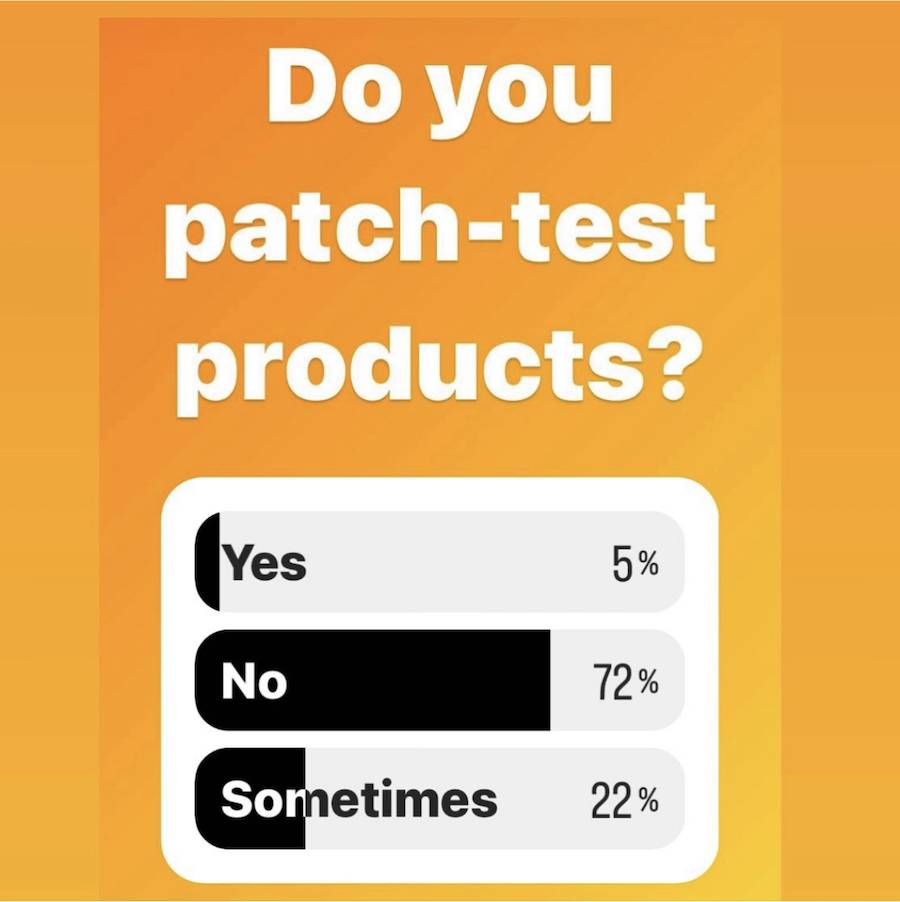
I asked the Deciem Chat Room community on Instagram whether they patch test new skincare products before using them. The results were surprising:
- 72% said they don’t patch test.
- 22% said they sometimes patch test.
- Only 5% said they always patch test.
While patch testing is recommended by skincare brands and dermatologists, it’s clear that most people skip this important step.
Why Don’t People Patch Test?
From talking to thousands of skincare enthusiasts over the years, these are the most common reasons:
- “I’ve never had a reaction before.” Many people assume their skin can tolerate anything because they’ve never experienced irritation or an allergic reaction.
- Excitement! After waiting for an order to arrive, it’s tempting to open every bottle and start using everything immediately.
- Following influencers instead of instructions. Social media is full of fantastic skincare content, but everyone’s skin is different. Always read The Ordinary’s official directions before using a new product rather than copying someone else’s routine.
- People don’t realise skincare can cause reactions. Many assume skincare products are completely harmless, when in reality even gentle products can occasionally cause irritation or an allergic reaction.
- It’s simply not a habit. Most people wouldn’t think to patch test a new lipstick, foundation or mascara, so they don’t automatically think to patch test skincare either.
Community Insight: Almost 3 out of 4 people in our Instagram poll admitted they don’t patch test—but it’s still one of the simplest ways to reduce the risk of irritation when starting a new skincare product.
Which The Ordinary products cause the most reactions?
According to the posts in the Facebook Group, these are The Ordinary products that seem to cause the most reactions, according to the posts in the Facebook Group.
- The Ordinary Salicylic Acid 2% Solution – old formula
- AHA 30% + BHA2%
- Salicylic Acid Masque
- Niacinamide
- But remember, you can react to any product!
Irritation around the eyes
It’s important to avoid the eye area when applying products, particularly if products say to avoid the eyes.
How do I patch-test The Ordinary products?
This is how The Ordinary recommends patch-testing their products. Some people react very quickly to certain ingredients, whilst for others, it may take some time for a reaction to show, which is why it’s best to do a patch test over 3 days.
How to patch test The Ordinary Salicylic Acid 2% Masque
- Apply the product as directed to a small area once a day for three days to test if you are sensitive to this product.
- If you develop severe irritation, hives, swelling of eyes and mouth, blistering, or difficulty breathing, rinse off, cease use and consult a physician right away.
The Ordinary Salicylic Acid 2% Solution:
- Apply the product to a small area once a day for three days to test if you are sensitive to this product.
- Start with one application daily.
- If dryness or peeling occurs, reduce application to once a day or every other day.
- If you develop severe irritation, hives, swelling of eyes and mouth, blistering, or difficulty breathing, rinse off, cease use, and consult a physician immediately.
The Ordinary Niacinamide, Retinols, Acids, Peptides and other leave-on products
- Apply a small amount of the product onto a clean area of skin on the upper forearm.
- Keep the area dry.
- After 24 hours, rinse the area.
- Do not use the product if any redness, burning, itching, blistering, or irritation is observed at any time throughout the test.
How to patch-test Deciem rinse-off products
Cleaners, Shampoos, Conditioners, Body Washes, Grooming Products.
- Apply a small amount of the product onto a clean skin area on the upper forearm.
- Keep the area dry.
- After 24 hours, rinse the area.
- Do not use the product if any redness, burning, itching, blistering, or irritation is observed throughout the test.
How to patch test Deciem Masks and Peeling Solutions
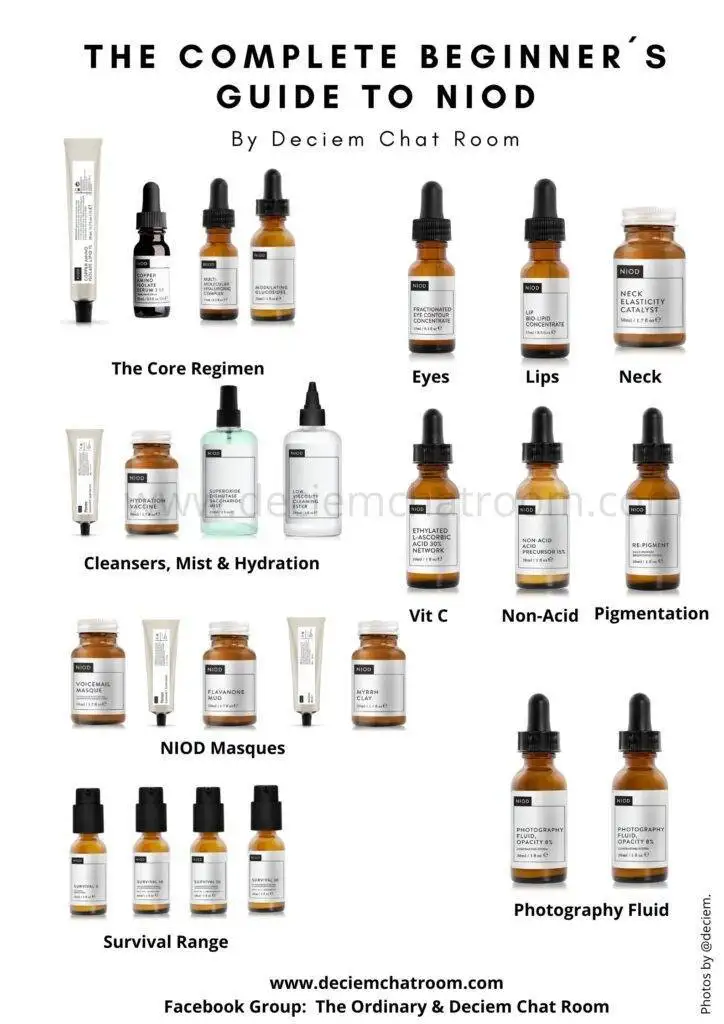
The Ordinary AHA 30% + BHA 2% Peeling Solution, NIOD Mastic Must, NIOD Myrrh Clay, NIOD Flavanone Mud.
- Apply a small amount of the product onto a clean area of skin on the upper forearm.
- Leave on for the specified length of time stated in the directions of use of the product.
- Rinse off when the specified time has passed.
- If any redness, burning, itching, blistering or irritation is observed within 24 hours of the patch test, do not use the product.
Symptoms of an Allergic Reaction to Skincare
A mild reaction may settle once you stop using the product, but some allergic reactions can be serious and require urgent medical attention.
Watch out for the following symptoms:
- 🔴 Severe redness or irritation
- 🔥 Burning or stinging that doesn’t quickly improve
- 🩹 Itching or a persistent rash
- 🫧 Hives (raised, itchy welts)
- 👁️ Swelling around the eyes, lips or face
- 💧 Blistering or peeling skin
- 😣 Pain or tenderness
- 🌬️ Difficulty breathing, wheezing or swelling of the tongue or throat (seek emergency medical help immediately)
Important: If you experience severe swelling, difficulty breathing or any symptoms of anaphylaxis, stop using the product immediately and seek emergency medical attention.
Is It an Allergic Reaction or Just Skin Irritation?
Not every reaction means you’re allergic. Active ingredients such as retinoids, exfoliating acids and Vitamin C can sometimes cause temporary dryness, redness or mild irritation while your skin adjusts.
If you’re unsure whether you’re experiencing skin irritation or an allergic reaction, stop using the product and seek advice from a healthcare professional or dermatologist, especially if symptoms are severe or don’t improve.
Real Examples of The Ordinary Allergic Reactions
Over the years, The Ordinary Salicylic Acid 2% Solution (OLD FORMULA) has occasionally made headlines after some users shared photos of severe skin reactions online. Since then, The Ordinary has reformulated the product, and today it remains one of the brand’s most popular treatments for blemishes, acne-prone skin and congestion.
In fact, 74% of Deciem Chat Room members who reviewed the product said they loved it and were delighted when it returned after being reformulated.
The stories shared online are upsetting, and I sincerely hope everyone affected has made a full recovery. However, it’s important to remember that we don’t know the full circumstances behind these reactions. We don’t know whether the product was patch tested first, applied to broken or compromised skin, combined with other active ingredients, or used incorrectly. We also don’t know whether factors such as sun exposure or other skincare products contributed to the reaction.
This is exactly why it’s so important to patch test every new skincare product, especially products containing active ingredients such as salicylic acid, retinoids and exfoliating acids. Always follow The Ordinary’s directions for use, avoid overusing exfoliating acids, and if you’re treating a single blemish, consider spot testing before applying the product to your entire face.


Allergic Reactions Can Happen with Any Skincare Product
It’s important to remember that allergic reactions and skin irritation can happen with any skincare product, sunscreen, fragrance or cosmetic—not just The Ordinary. Most reactions never make the headlines, but they are more common than many people realise.
Over the years, I’ve personally experienced reactions to several well-known skincare and beauty products, including sunscreens, fragrances, deodorants and hair dye. In one case, I thought I’d developed an allergy to my regular hair dye, but it turned out the reaction was caused by the powder inside the disposable gloves!
These experiences have taught me the importance of patch testing every new skincare or cosmetic product, even if you’ve never had a reaction before. Allergies and sensitivities can develop at any stage of life, and a product you’ve used safely for years isn’t guaranteed to stay suitable forever.
Thankfully, despite trying almost every product in the range, I’ve never experienced an allergic reaction to The Ordinary products. That’s one of the reasons I always recommend introducing new products slowly, patch testing first, and adding only one new product at a time so you can easily identify the cause if your skin reacts.
How to Use The Ordinary Products Safely
Before adding any new The Ordinary product to your skincare routine, follow these simple tips to help protect your skin and get the best results.
✅ Always patch test new products.
Patch testing is the easiest way to check whether your skin is likely to react before applying a product to your entire face.
✅ Read the official directions for use.
Every The Ordinary product has its own instructions, recommended frequency of use and any important warnings. Always read these before using a new product.
✅ Check for product conflicts.
Some ingredients, including retinoids, direct acids, peptides and certain forms of Vitamin C, should not be used together in the same routine. Always check The Ordinary Products You Can & Cannot Mix before layering products.
✅ Take extra care before and after cosmetic treatments.
If you’re having treatments such as laser, chemical peels, microneedling, Botox or microblading, ask your practitioner which skincare ingredients you should temporarily avoid. For example, before my microblading treatment I was advised to stop using retinoids and exfoliating acids for a week beforehand and for several weeks afterwards.
✅ Protect your skin from the sun.
Many active ingredients, including retinoids and exfoliating acids, can make your skin more sensitive to UV exposure. Avoid excessive sun exposure and wear protective clothing where possible.
✅ Wear SPF every morning.
Daily sunscreen is one of the most important steps in any skincare routine. Applying a broad-spectrum SPF 30 or higherevery morning helps protect your skin from sun damage, supports healthy skin and maximises the results of your skincare products.
✅ Build Your Own Skincare Routine Here.
💙 Top Tip: Introduce one new product at a time and give your skin at least a week to adjust before adding another. If irritation occurs, it’s much easier to identify which product is responsible.